
Establishing a U.S.-China AI Risk and Incident Dialogue
This report was co-authored by Sarah Godek and Karson Elmgren.
U.S. and Chinese officials will meet this month to discuss AI risks. To manage shared risks and ensure stability, we recommend establishing a standing dialogue mechanism informed by the experience of mechanisms like the Military Maritime Consultative Agreement (MMCA). Precedent shows Washington and Beijing can sustain dialogues to manage shared risks when meetings are regularized, the scope stays narrow, and both sides see practical or strategic value in engaging. As the risk of AI-enabled incidents with destabilizing impacts grows, now is the time to develop communications channels—before they are needed in a crisis.
A U.S.–China AI Risk and Incident Dialogue (AIRID) would serve four functions:
Development of shared definitions and taxonomies for AI risks and incidents
Routine information sharing on AI risks, incidents, and domestic governance
Establishment of AI-incident notification procedures
Post-incident consultation and review
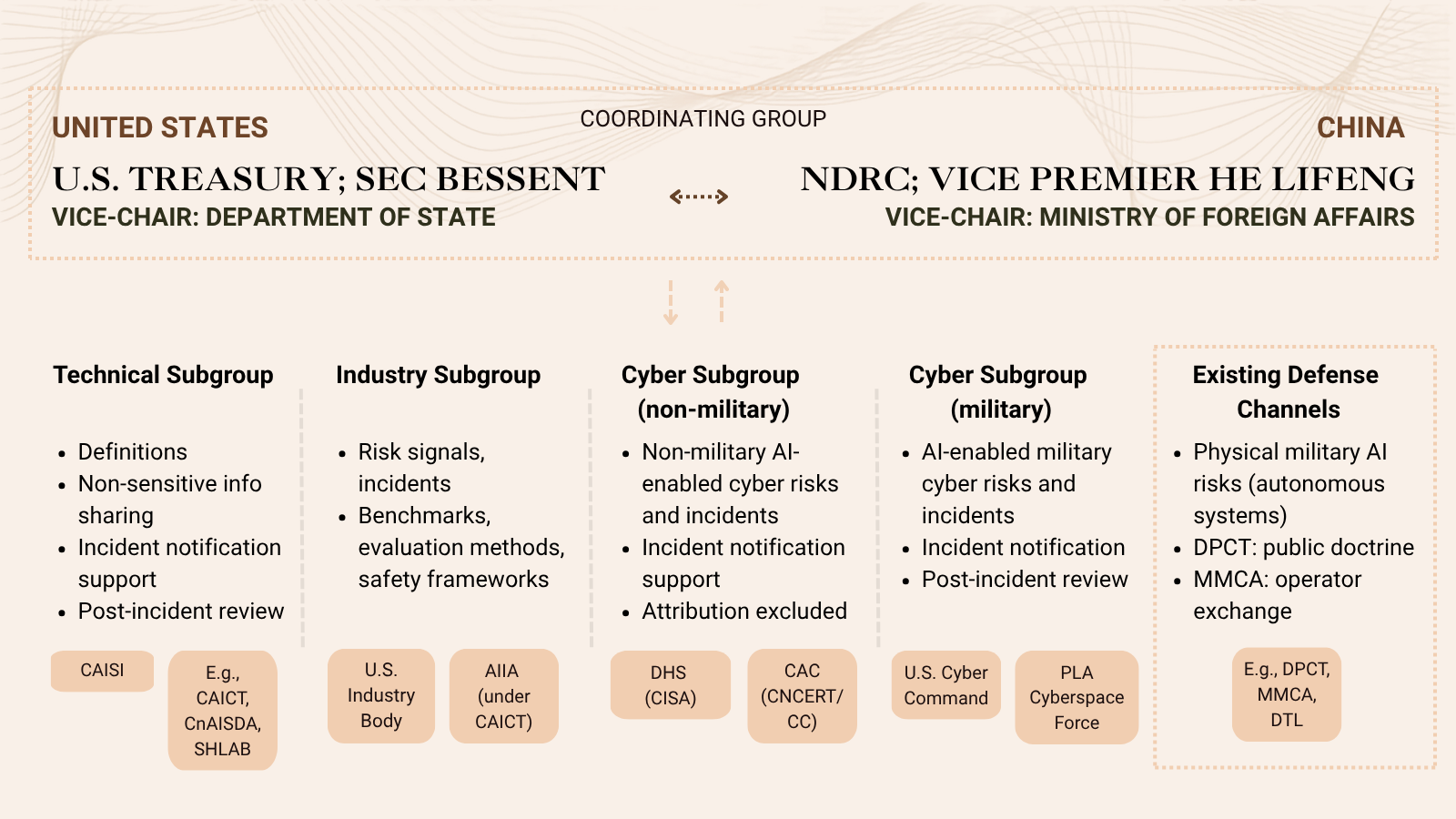
Figure 1: Proposed U.S.–China AIRID structure, with lead agencies and organizations under each subgroup
The U.S.–China AIRID would include a coordinating group supported by various subgroups, with a phased implementation approach. The structure adapts the MMCA’s format, led by appointed representatives (similar to the Strategic and Economic Dialogue). Subgroups should include technical officials, industry representatives, and cybersecurity representatives in both the military and non-military domains. Existing defense channels like the MMCA, Defense Policy Coordination Talks, and Defense Telephone Link should be adapted to address military AI issues in the physical world.